Carbon Fiber Wrap for Beams: Complete Guide for RCC Strengthening (2026)
Introduction
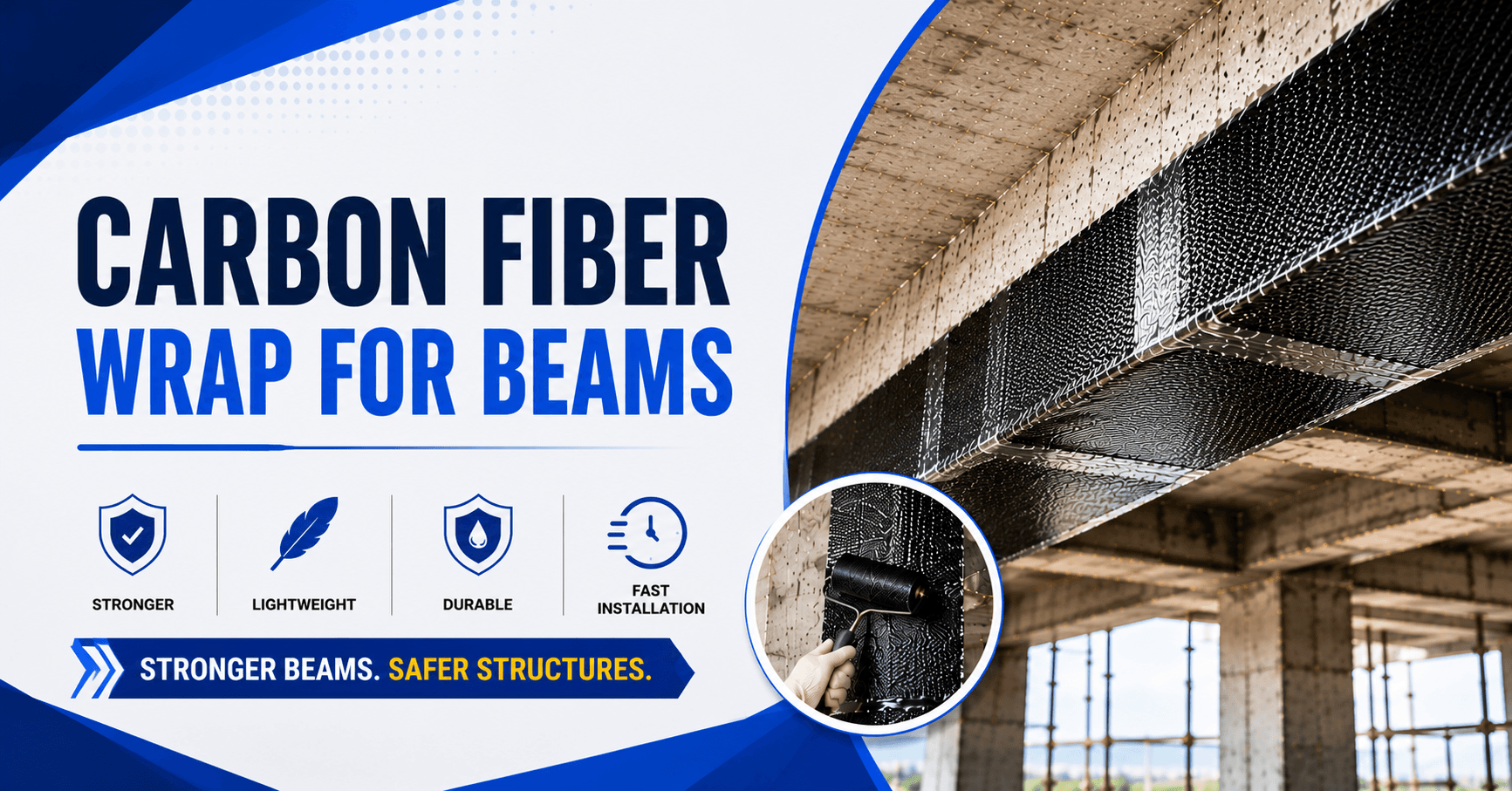
Carbon Fiber Wrap for Beams is one of the most advanced and effective techniques used today for strengthening reinforced concrete (RCC) beams. In 2026, with increasing demand for structural upgrades, load enhancement, and fast retrofitting solutions, carbon fiber wrapping has become the preferred choice for engineers, contractors, and building owners.
If your beams are showing cracks, deflection, corrosion damage, or need load capacity improvement, this method offers a high-performance, long-lasting, and cost-efficient solution.
What is Carbon Fiber Wrap for Beams?
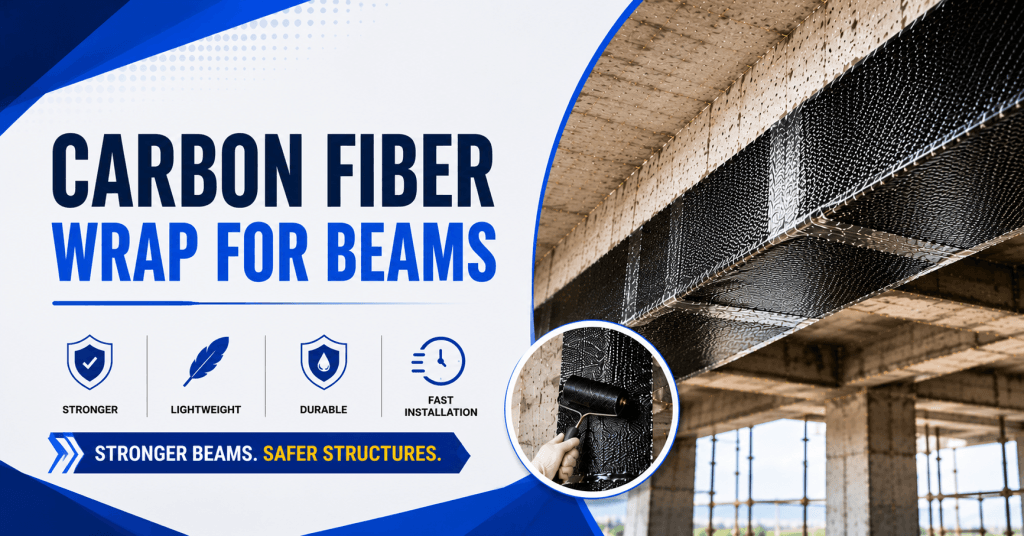
Carbon Fiber Wrap for Beams involves applying CFRP (Carbon Fiber Reinforced Polymer) sheets or fabrics on the surface of RCC beams using epoxy resin to increase their strength, stiffness, and durability.
Unlike traditional methods, this system:
- Adds minimal weight
- Requires no major structural changes
- Provides high tensile strength reinforcement
Why Beam Strengthening is Required
Beams are essential for load transfer in buildings, and any weakness can compromise the entire structure.
Common Reasons for Beam Strengthening:
- Increased load (new floors, heavy equipment)
- Structural design deficiencies
- Aging infrastructure
- Steel reinforcement corrosion
- Cracks and deflection in beams
- Seismic retrofitting requirements
Benefits of Carbon Fiber Wrap for Beams
Key Advantages
- High Tensile Strength
Carbon fiber is significantly stronger than steel in tension. - Lightweight Solution
No additional load on structure. - Fast Installation
Minimal downtime for buildings. - No Size Increase
Maintains beam dimensions. - Corrosion Resistant
Ideal for harsh environments. - Long Service Life
Can last 20–50 years with proper installation.
How Carbon Fiber Wrap Strengthens Beams
Working Mechanism:
Carbon fiber wrap enhances beam performance through:
1. Flexural Strengthening
- Applied at the bottom (soffit) of beams
- Increases bending resistance
2. Shear Strengthening
- Applied on sides (U-wrap or full wrap)
- Prevents diagonal shear cracks
3. Crack Control
- Restricts crack widening
- Improves structural integrity
Types of Carbon Fiber Wrapping for Beams
1. Soffit Wrapping (Bottom)
- For flexural strengthening
- Most common method
2. U-Wrap (Three Sides)
- Covers bottom + sides
- Used for shear strengthening
3. Full Wrap (All Sides)
- Maximum strengthening
- Used in critical structures
Step-by-Step Application Process
Installation Steps
Step 1: Surface Preparation
- Clean beam surface
- Remove loose concrete
- Grind for smooth finish
Step 2: Crack Repair
- Inject epoxy in cracks
Step 3: Primer Application
- Apply epoxy primer
Step 4: Putty/Leveling
- Smooth uneven surfaces
Step 5: Resin Application
- Apply saturant resin
Step 6: Carbon Fiber Sheet Installation
- Place CFRP sheet properly
- Align fiber direction
Step 7: Rolling
- Remove air bubbles
Step 8: Protective Coating
- Apply UV/fire-resistant coating
Design Considerations for Engineers
Key Factors:
- Load calculations
- Beam dimensions
- Number of CFRP layers
- Fiber orientation
- Bond strength
- Environmental exposure
Standards:
- ACI 440 (FRP strengthening guidelines)
- Relevant IS codes for retrofitting
Carbon Fiber Wrap vs Traditional Beam Strengthening
| Feature | Carbon Fiber Wrap | Steel Plate / Jacketing |
|---|---|---|
| Installation | Fast | Time-consuming |
| Weight | Lightweight | Heavy |
| Thickness | Thin | Thick |
| Corrosion Resistance | Excellent | Poor |
| Maintenance | Low | High |
👉 Conclusion: Carbon fiber wrap is a modern, efficient solution for beam strengthening.
Applications of Carbon Fiber Wrap for Beams
Common Use Cases:
- Residential buildings
- Commercial complexes
- Industrial facilities
- Bridges & flyovers
- Parking structures
- Hospitals & schools
Factors Affecting Cost of Carbon Fiber Wrap for Beams in India (2026)
- Area (sq. ft.)
- Number of layers
- Beam condition
- Accessibility
- Material quality
Note: Price varies depending on project complexity.
Common Mistakes to Avoid
- Poor surface preparation
- Incorrect resin mixing
- Air gaps in wrapping
- Wrong fiber direction
- Using low-quality CFRP
Maintenance & Durability
- Lifespan: 20–50 years
- Minimal maintenance required
- Regular inspection recommended
Frequently Asked Questions (FAQs)
Is carbon fiber wrapping suitable for all beams?
Yes, but proper structural assessment is required.
Can it repair cracked beams?
Yes, along with epoxy crack repair.
Is it better than steel plate bonding?
Yes, due to lightweight and corrosion resistance.
How long does installation take?
Typically 1–5 days depending on project size.
Conclusion
Carbon Fiber Wrap for Beams is transforming RCC strengthening practices in 2026. With its high strength, fast installation, and durability, it is the most efficient solution for structural retrofitting.
Whether you are dealing with damaged beams, increased loads, or seismic upgrades, carbon fiber wrapping ensures long-term safety and performance.
Get Expert Help for Your Project
Looking to strengthen your beams?
Get best carbon fiber material price quote
Ideal for residential, commercial & industrial projects
Call / WhatsApp now for carbon fiber beam strengthening solutions!