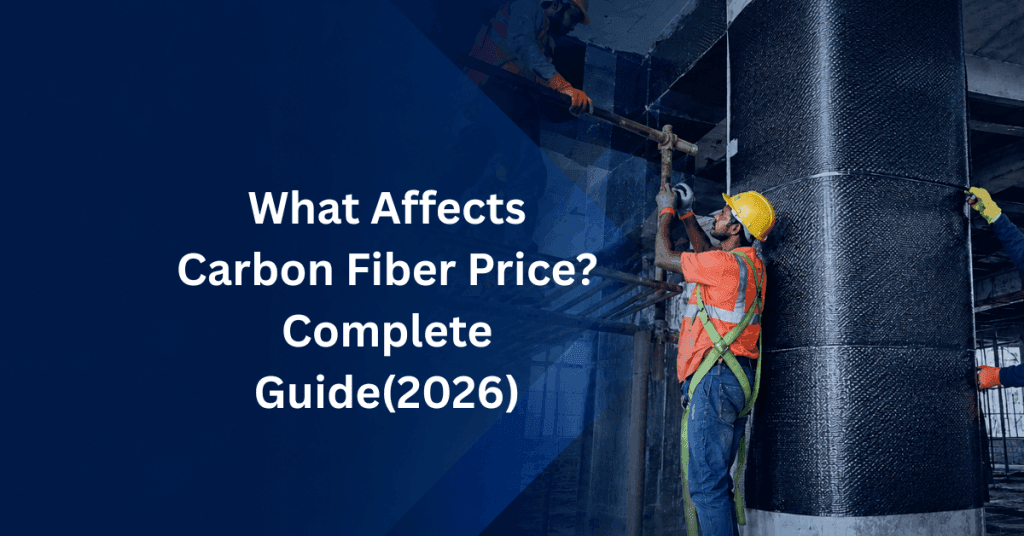
What Affects Carbon Fiber Price? Complete Guide(2026)
Carbon fiber has become one of the most demanded materials in construction, infrastructure strengthening, automotive, and aerospace industries. But one question buyers always ask is:
👉 “Why does carbon fiber price vary so much?”
In 2026, carbon fiber price depends on multiple technical and market factors—not just raw material cost. Understanding these factors helps you save cost, choose the right material, and avoid overpaying.
Current Carbon Fiber Price Overview
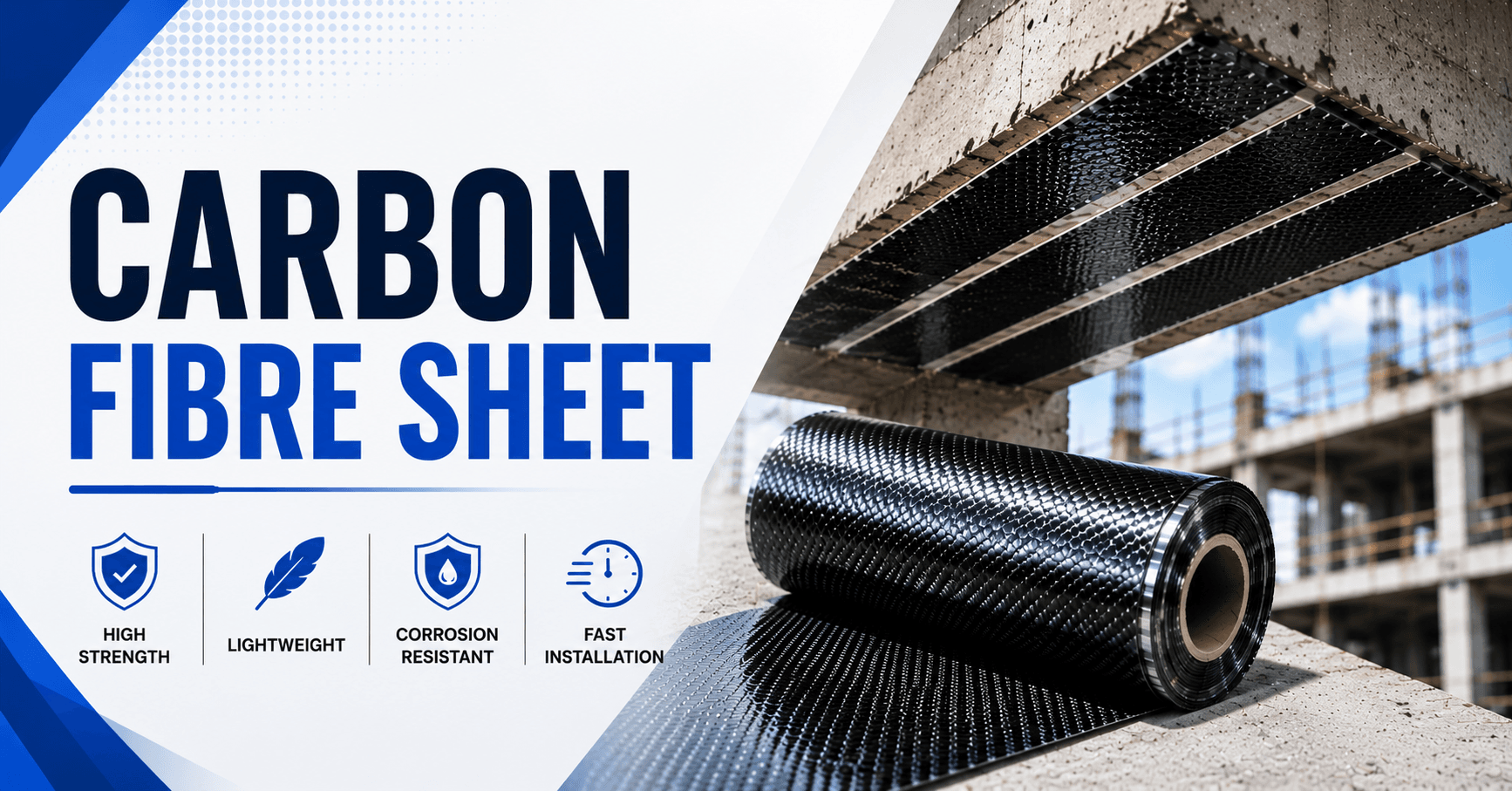
Unidirectional Carbon Fiber Sheet : Price – ₹ 785/Square Meter*
Factors Affecting Carbon Fiber Price
1. Raw Material Cost (PAN Fiber)
The biggest cost component in carbon fiber is polyacrylonitrile (PAN).
PAN contributes up to 50% of total cost
Limited global suppliers increase price volatility
Oil price fluctuations directly impact cost
👉 If raw material price increases → carbon fiber price increases instantly.
2. Manufacturing Process (Most Important Factor)
Carbon fiber production is highly complex:
- Stabilization & carbonization at 1000°C+ temperatures
- Energy-intensive process
- Requires precision control
👉 This makes carbon fiber expensive compared to steel or aluminum.
Manufacturing Methods Impact Price:
- Vacuum infusion → Lower cost
- Prepreg process → Medium cost
- Autoclave curing → Premium pricing (30–60% higher)
3. Type & Form of Carbon Fiber
Carbon fiber price also depends on its form:
- Raw fiber (cheapest)
- Fabric / cloth (moderate)
- Sheets / laminates (higher)
- Prepreg (most expensive)
👉 Processed products cost more due to additional manufacturing steps.
4. Demand & Market Trends (2026)
Carbon fiber demand is rising due to:
- EV industry growth
- Infrastructure repair projects
- Aerospace & defense
👉 High demand = Higher prices
👉 Low demand = Competitive pricing
5. Quantity (Bulk vs Small Orders)
- Bulk orders → Lower price per kg
- Small quantity → Higher cost
👉 Large projects get better pricing due to economies of scale.
6. Location, Import & Supplier
Carbon fiber price varies based on:
- Import duties in India
- Logistics cost
- Local vs imported material
- Manufacturer vs trader pricing
👉 Buying directly from manufacturer reduces cost significantly.
7. Supplier & Brand Reputation
Trusted manufacturers charge slightly higher because:
- Certified quality
- Tested strength
- Consistent performance
👉 Cheap suppliers may compromise quality → leading to structural failure risk.
8. Application Type (Critical Factor)
Different applications require different grades:
- Structural strengthening → Mid-range price
- Aerospace → Premium price
- Decorative use → Lower grade
👉 Wrong selection = Overpaying OR poor performance
Expert Tips to Get Best Carbon Fiber Price
✔ Buy directly from manufacturer
✔ Choose correct grade (don’t over-specify)
✔ Order in bulk
✔ Compare multiple suppliers
✔ Focus on value, not just price
Quick Summary
Carbon fiber price is influenced by raw material, manufacturing process, grade, demand, and supplier. Understanding these factors helps you:
✔ Save cost
✔ Choose correct material
✔ Improve project performance
Get Best Carbon Fiber Price Today
👉 Talk to a technical expert and get instant quotation
👉 Bulk discount available for large projects: Click Here
📞 Call Now for Best Price: +91 9323244244
Frequently Asked Questions (FAQs)
What is carbon fiber sheet price per square meter?
The unidirectional carbon fiber sheet price is ₹ 785/Square Meter*.
Why is carbon fiber so expensive?
Because of high raw material cost, energy-intensive manufacturing, and limited production scale.
How to reduce carbon fiber cost?
Choose correct grade, buy in bulk, and source from a direct manufacturer.
Which is stronger, 3K or 12K carbon fiber?
3K carbon fiber is generally stronger and more flexible, while 12K carbon fiber is thicker and better for heavy-duty applications.
Can carbon fiber break easily?
No, carbon fiber does not break easily under normal conditions—it is extremely strong and durable. However, it can fail suddenly under certain types of stress.
Carbon fiber has very high tensile strength, meaning it can handle heavy loads without stretching or deforming.
It is stronger than steel by weight, making it ideal for structural applications.
However, carbon fiber is brittle in nature, so it can crack or break if subjected to sharp impact, excessive bending, or improper installation.