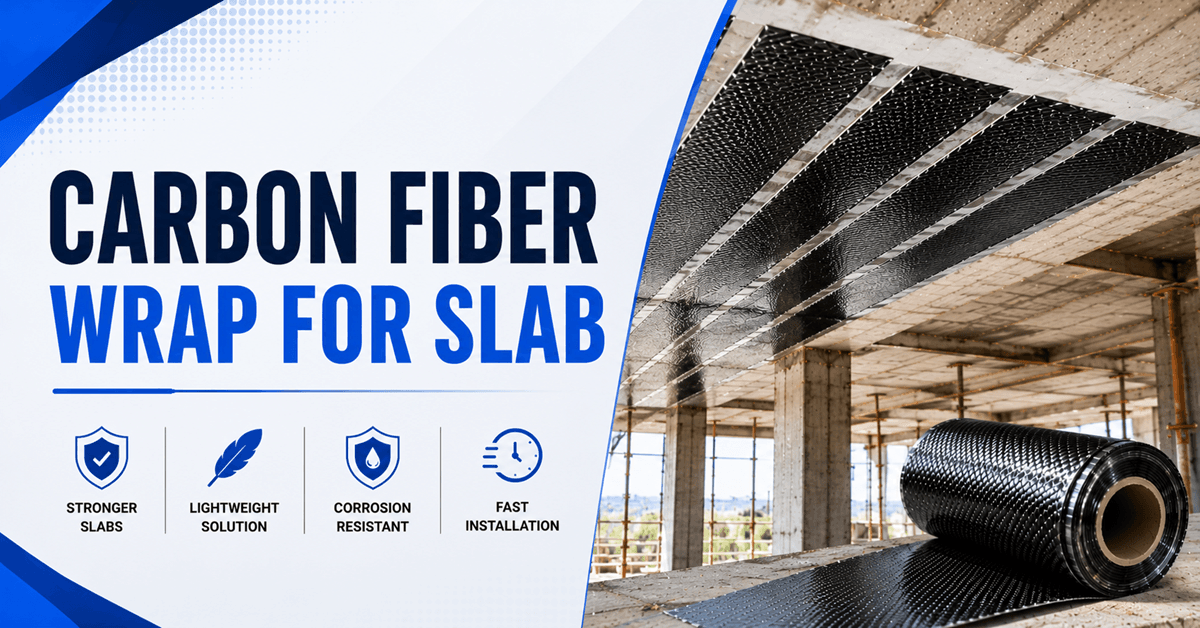
Carbon Fiber Wrap for Slab: Complete Guide for RCC Strengthening (2026)
Introduction to Carbon Fiber Wrap for Slab
In modern construction and structural repair, slabs are among the most critical elements of any building. Over time, due to increased loads, poor construction practices, corrosion, or design limitations, slabs may develop cracks, deflection, or reduced load capacity.
This is where carbon fiber wrap for slab has become a game-changing solution.
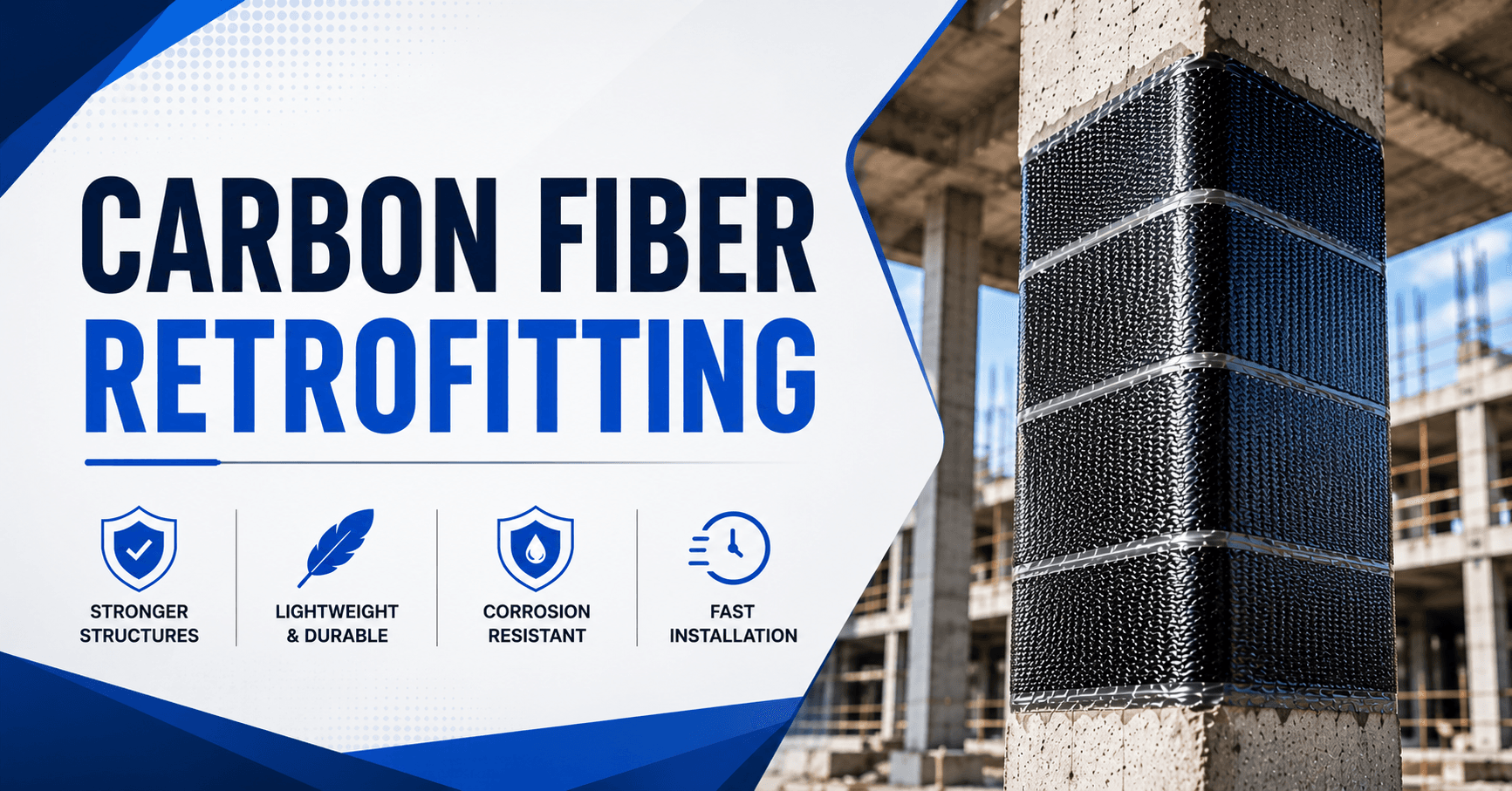
Carbon fiber wrapping uses Carbon Fiber Reinforced Polymer (CFRP) materials to strengthen existing RCC slabs without increasing thickness or adding heavy structural components. In 2026, this method is widely used across residential, commercial, and industrial projects in India.
What is Carbon Fiber Wrap for Slab?
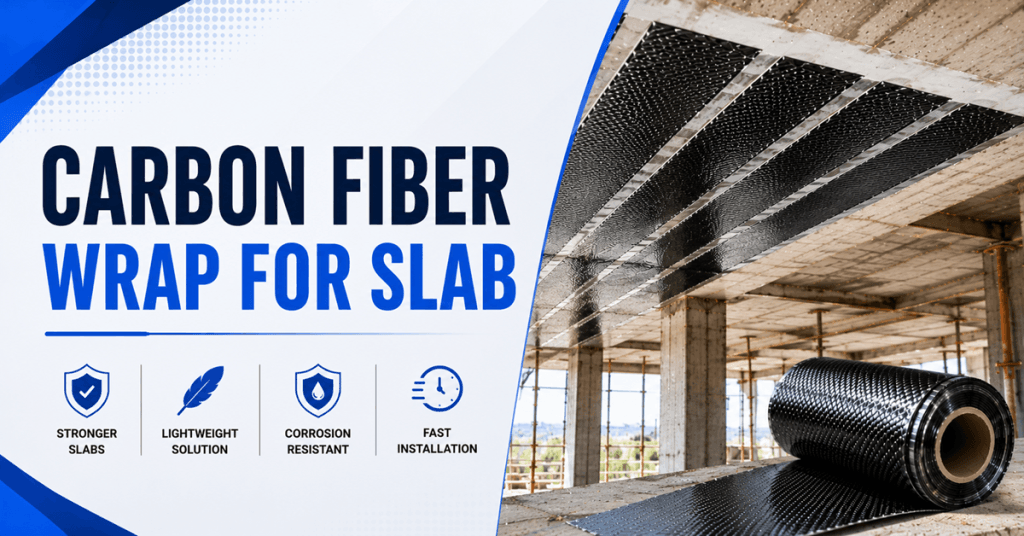
Carbon fiber wrap for slab is a structural strengthening technique where high-strength carbon fiber sheets or fabrics are externally bonded to the slab surface using epoxy resins.
Key Features
- Ultra-high tensile strength
- Lightweight material
- Thin application (no height increase)
- Fast installation
How It Works
When applied to the tension face of a slab:
- Carbon fibers absorb tensile stresses
- Reduce cracks and deflection
- Increase load-bearing capacity
- Enhance durability
Why Slabs Require Strengthening
1. Increased Load Demand
- Additional floors
- Heavy machinery
- Change in building usage
2. Structural Defects
- Poor design or execution
- Honeycombing
- Insufficient reinforcement
3. Environmental Damage
- Corrosion of steel
- Moisture ingress
- Chemical exposure
4. Aging Infrastructure
Many buildings in India are 20–40 years old and require strengthening.
Benefits of Carbon Fiber Wrap for Slab
1. High Strength-to-Weight Ratio
Carbon fiber is significantly stronger than steel while being extremely lightweight.
2. No Increase in Slab Thickness
Perfect for spaces with height constraints.
3. Fast Installation
Minimal downtime compared to traditional strengthening.
4. Corrosion Resistant
Ideal for coastal and industrial environments.
5. Cost-Effective Solution
Lower labor and faster execution reduce total cost.
6. Minimal Disruption
No heavy demolition or structural modification required.
Applications of Carbon Fiber Wrap for Slab
1. Residential Buildings
- Floor slab strengthening
- Renovation projects
2. Commercial Structures
- Office buildings
- Shopping malls
- Parking slabs
3. Industrial Floors
- Heavy machinery load support
- Warehouse strengthening
4. Bridges & Flyovers
- Deck slab strengthening
5. Hospitals & Schools
- Safe structural upgrades without shutdown
Types of Carbon Fiber Systems for Slabs
1. Unidirectional Carbon Fiber Sheets
- Used for flexural strengthening
- Applied in direction of stress
2. Bidirectional Carbon Fiber Fabric
- Provides strength in two directions
3. Carbon Fiber Laminates (Plates)
- Used for high-load applications
4. Near Surface Mounted (NSM) Systems
- Carbon rods inserted into grooves
Step-by-Step Application Process
1. Structural Assessment
- Load analysis
- Crack inspection
- Engineering design
2. Surface Preparation
- Grinding surface
- Cleaning dust and debris
- Crack repair
3. Primer Application
Improves adhesion between slab and epoxy.
4. Epoxy Resin Application
- Base coat applied
- Saturation layer for bonding
5. Carbon Fiber Wrapping
- Sheet placed on slab
- Proper alignment ensured
6. Roller Application
Removes air bubbles and ensures bonding.
7. Curing Process
- 24 to 72 hours curing time
8. Protective Coating
- UV resistant coating
- Fire protection (if required)
Design Considerations for Slab Strengthening
1. Load Calculations
- Dead load
- Live load
- Future load increase
2. Fiber Orientation
Must align with stress direction.
3. Bond Strength
Proper surface preparation is critical.
4. Environmental Conditions
- Temperature
- Humidity
5. Safety Standards
Follow IS codes and international standards (ACI, ASTM).
Carbon Fiber Wrap vs Traditional Methods
| Parameter | Carbon Fiber Wrap for Slab | Steel Reinforcement | Concrete Overlay |
|---|---|---|---|
| Weight | Very Light | Heavy | Very Heavy |
| Thickness | Minimal | Moderate | High |
| Installation Time | Fast | Slow | Slow |
| Corrosion | No | Yes | Yes |
| Maintenance | Low | High | Medium |
- Surface condition
- Number of layers
- Material quality
- Site accessibility
- Labor complexity
Common Mistakes to Avoid
- Poor surface preparation
- Incorrect epoxy mixing
- Wrong fiber direction
- Air bubbles during application
- Use of low-quality materials
Quality Checklist
✔ Proper engineering design
✔ Certified carbon fiber materials
✔ Skilled applicators
✔ Controlled application conditions
✔ Final inspection and testing
Why Choose Carbon Fiber Wrap for Slab?
Carbon fiber wrap stands out due to:
- Superior strength
- Fast execution
- Long lifespan
- Minimal disruption
It is now considered the most advanced slab strengthening method in modern construction.
Conclusion
Carbon fiber wrap for slab is revolutionizing RCC strengthening by offering a fast, durable, and highly effective solution. Whether you are upgrading an old building or strengthening a slab for increased load, this method ensures long-term performance with minimal structural impact.
If you are planning slab strengthening in 2026, carbon fiber wrapping is the best choice for durability and efficiency.
Get Expert Consultation
Looking for carbon fiber wrap for slab in India?
✅ High-quality CFRP materials
✅ Expert technical support
✅ Best carbon Fiber Price & fast delivery
👉 Contact us today for project consultation & quote