Carbon Fibre Sheet: Complete Guide for Structural Strengthening (2026)
Introduction to Carbon Fibre Sheet
Carbon Fibre Sheet is one of the most advanced materials used in modern civil engineering for structural strengthening, repair, and retrofitting of RCC structures. With aging infrastructure, increasing load demands, and environmental damage, engineers are shifting from traditional strengthening methods to Carbon Fibre Reinforced Polymer (CFRP) solutions.
A carbon fibre sheet is a high-strength, lightweight reinforcement material applied externally to concrete structures using epoxy resin. It significantly improves load capacity, durability, and structural performance without adding extra weight.
What is Carbon Fibre Sheet?
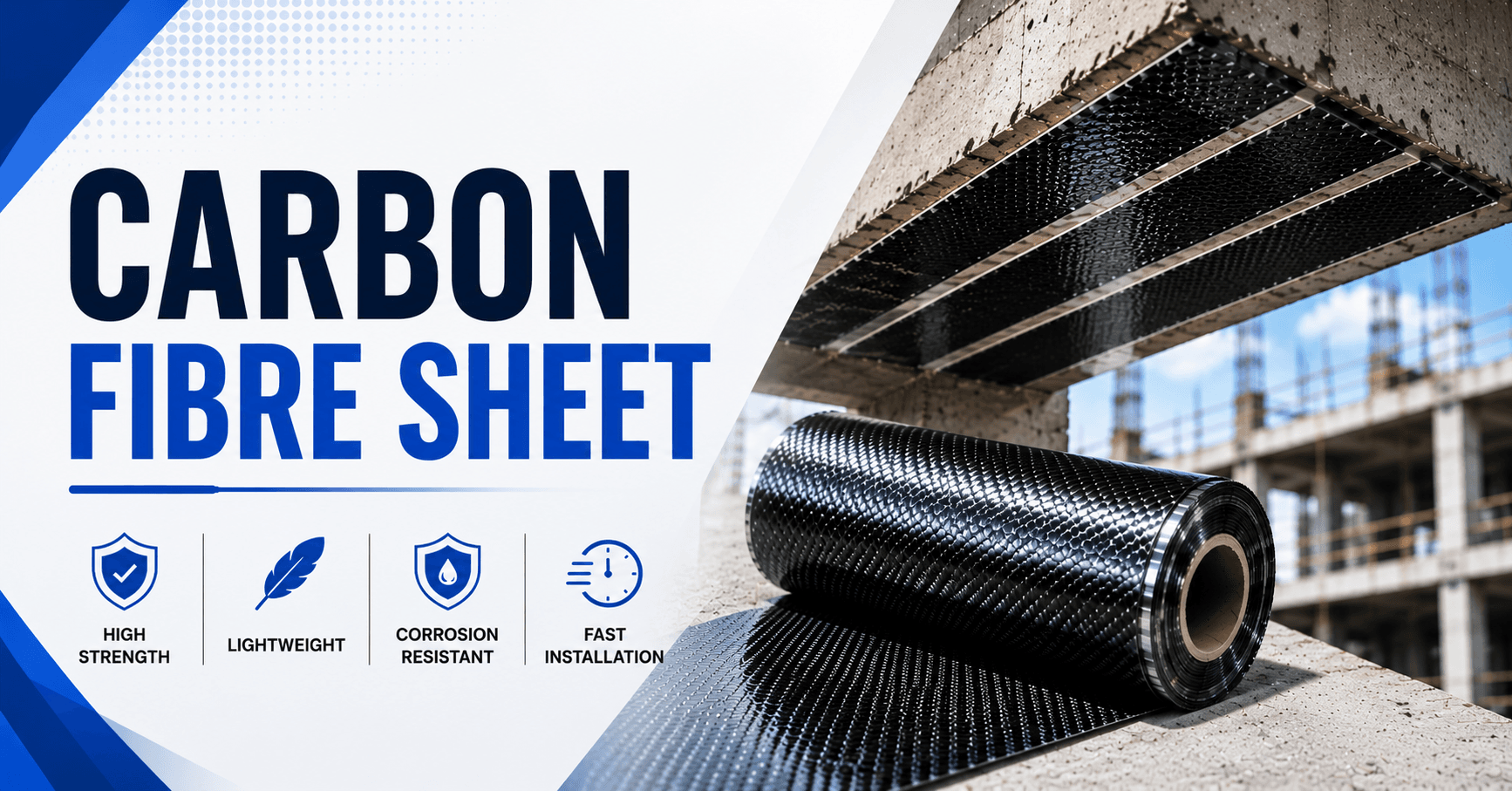
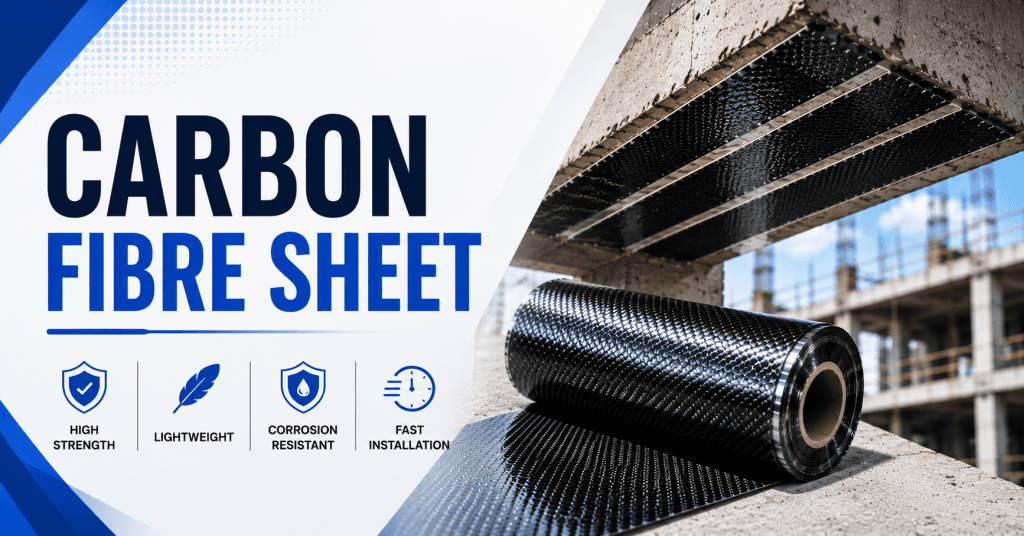
A Carbon Fibre Sheet is a flexible fabric made from high-strength carbon fibers aligned in a specific direction (usually unidirectional) to provide maximum tensile strength.
Key Characteristics:
- Extremely high tensile strength
- Lightweight and thin
- Corrosion resistant
- Easy to install
How It Works:
When bonded to concrete using epoxy, the sheet acts as external reinforcement, taking tensile stress and improving:
- Flexural strength
- Shear strength
- Structural ductility
Types of Carbon Fibre Sheets
1. Unidirectional Carbon Fibre Sheet
- Fibers aligned in one direction
- Used for beam and slab strengthening
- Highest tensile strength in load direction
2. Bidirectional Carbon Fibre Sheet
- Fibers woven in two directions
- Used where multi-directional strength is required
3. Different GSM Variants
- 200 GSM, 300 GSM, 600 GSM
- Higher GSM = Higher strength
Common Problems Solved:
- Cracks in RCC beams and slabs
- Corrosion of steel reinforcement
- Increased load requirements
- Structural design deficiencies
- Earthquake damage
Key Benefits:
| Benefit | Description |
|---|---|
| High Strength | Stronger than steel in tension |
| Lightweight | No additional load on structure |
| Corrosion Resistant | Ideal for coastal & industrial areas |
| Thin Application | No change in dimensions |
| Fast Installation | Saves time and labor cost |
Applications of Carbon Fibre Sheet
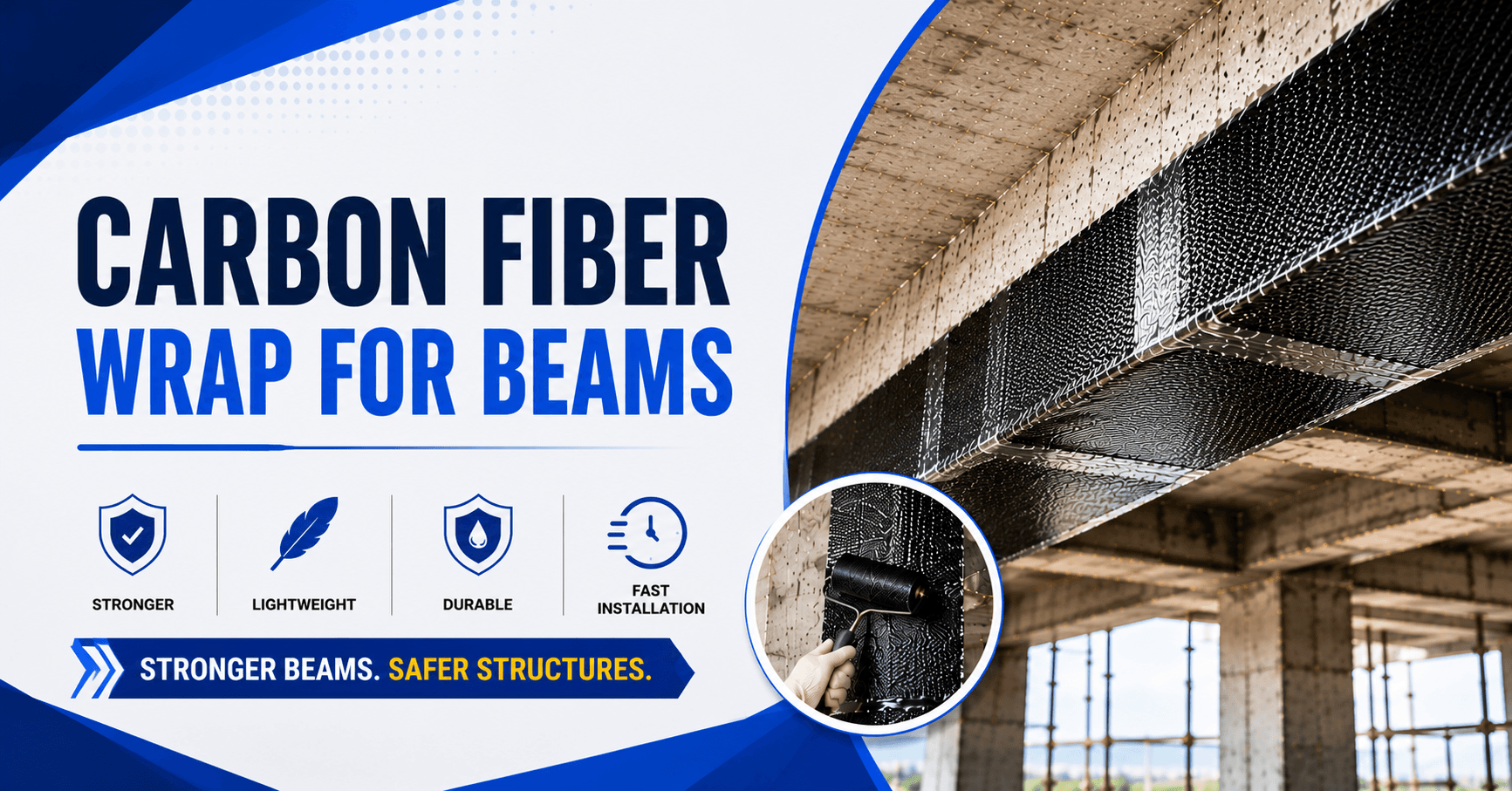
1. Beam Strengthening
Enhances flexural and shear capacity of RCC beams.
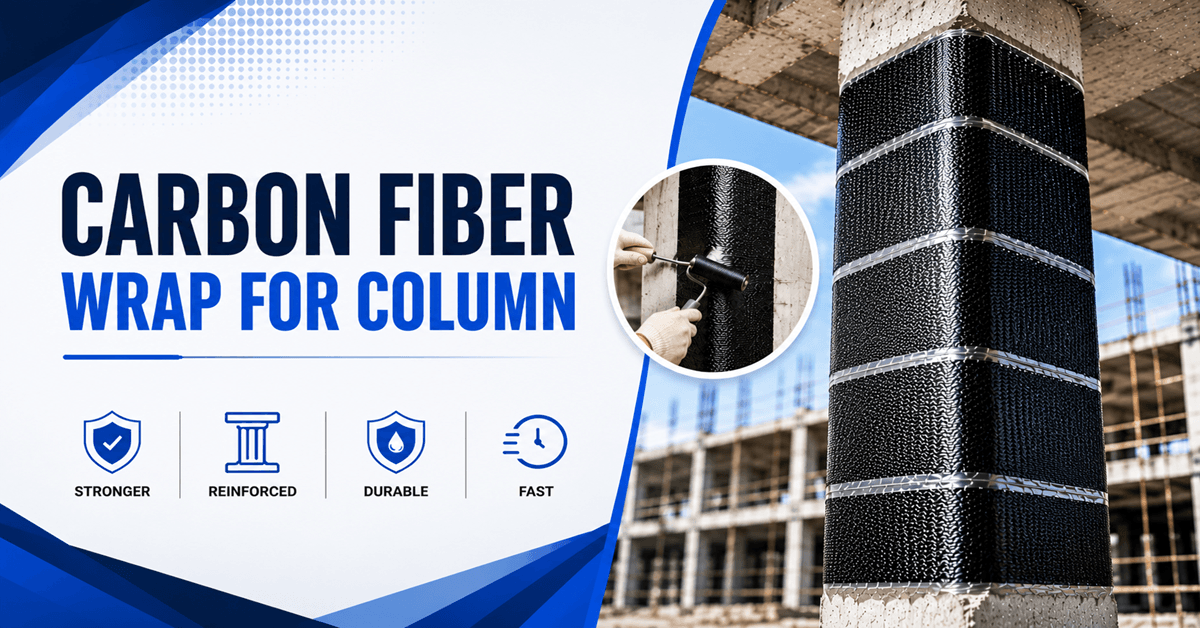
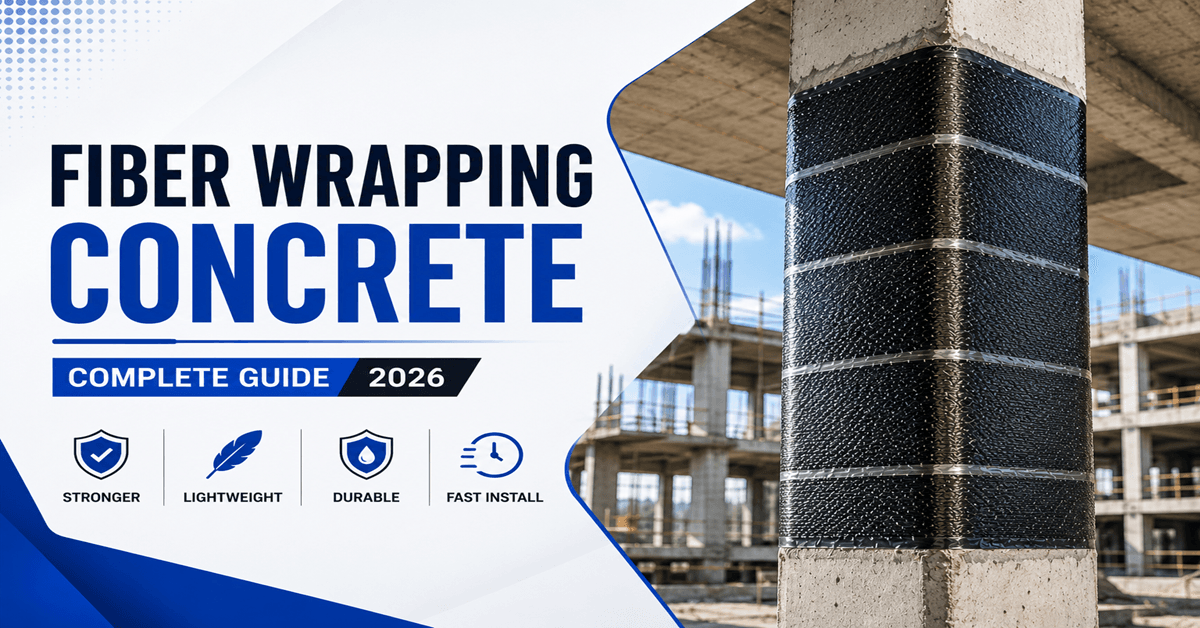
2. Column Strengthening
Provides confinement and increases load-bearing capacity.
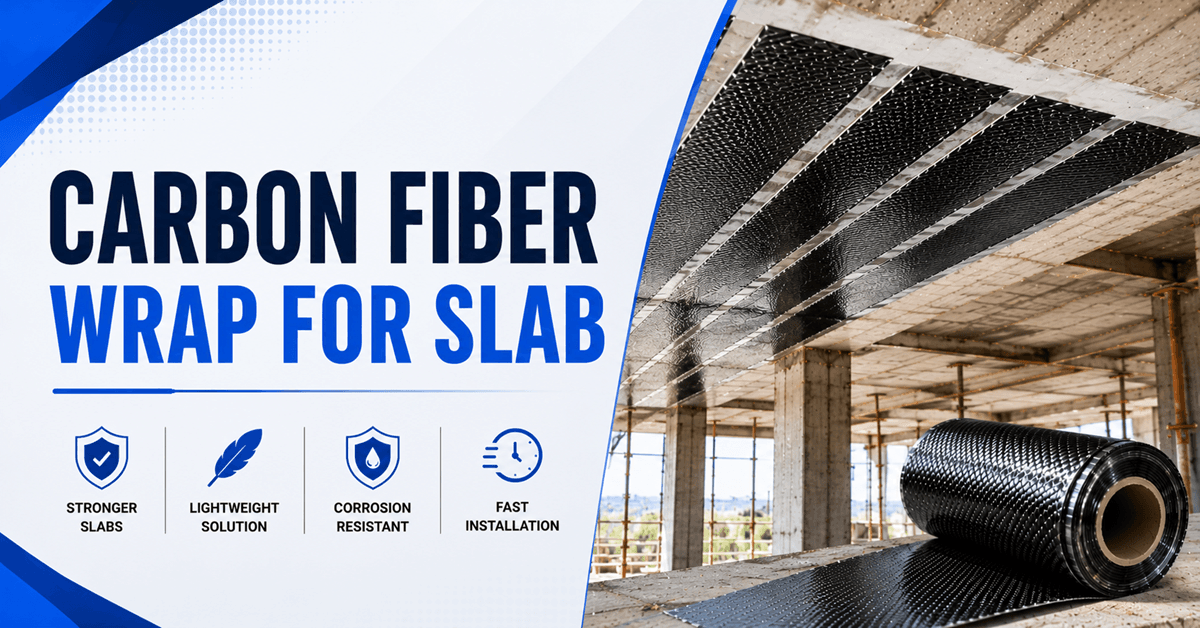
3. Slab Strengthening
Used for increasing load capacity in buildings.
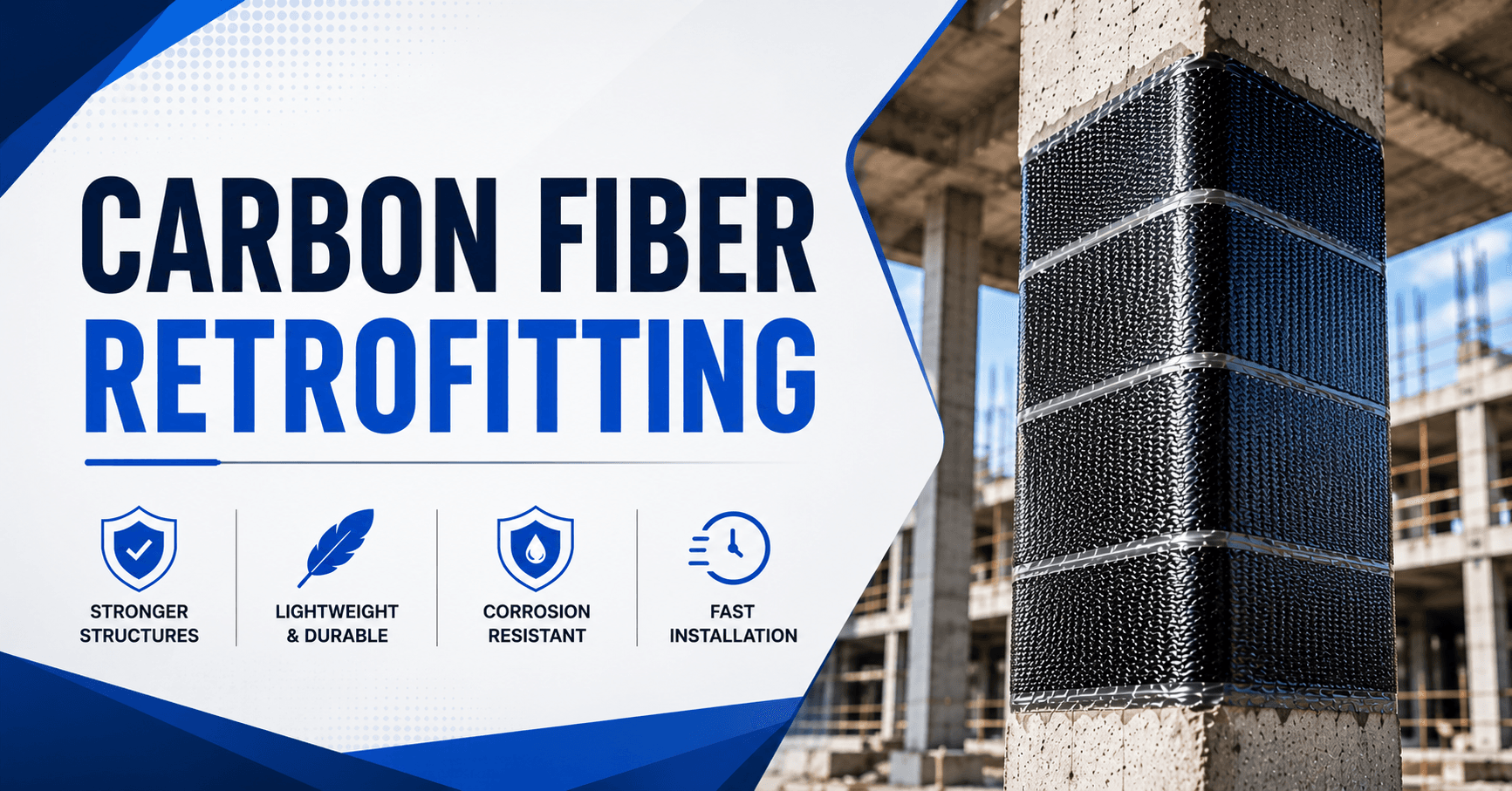
4. Seismic Retrofitting
Improves ductility and earthquake resistance.
5. Bridge Rehabilitation
Extends service life of bridges and flyovers.
Step-by-Step Installation Process
Step 1: Surface Preparation
- Clean and grind the surface
- Remove dust and loose particles
Step 2: Crack Repair
- Fill cracks using epoxy or repair mortar
Step 3: Primer Application
- Apply epoxy primer for better bonding
Step 4: Carbon Fibre Sheet Application
- Apply resin and place sheet carefully
- Ensure proper alignment
Step 5: Rolling & Finishing
- Remove air bubbles
- Apply protective coating
| Property | Value |
|---|---|
| Tensile Strength | 3000–4000 MPa |
| Modulus of Elasticity | 200–240 GPa |
| Thickness | 0.111 – 0.167 mm |
| Density | ~1.8 g/cm³ |
Carbon Fibre Sheet vs Traditional Methods
| Method | Carbon Fibre Sheet | Steel Jacketing |
|---|---|---|
| Weight | Very Low | High |
| Installation | Fast | Slow |
| Thickness | Thin | Bulky |
| Corrosion | No | Yes |
| Maintenance | Low | High |
Design Considerations
Before applying carbon fibre sheet:
- Load calculation
- Number of layers required
- Type of epoxy system
- Environmental conditions
- Surface condition
Proper design ensures maximum performance and safety.
Common Mistakes to Avoid
- Poor surface preparation
- Incorrect resin mixing
- Misalignment of fibers
- Air voids during application
- Untrained applicators
Carbon Fibre Sheet in India (2026 Trends)
Growing Demand Due To:
- Aging infrastructure
- Coastal corrosion problems
- Smart city development
- Industrial expansion
Major Usage Areas:
- Residential buildings
- Bridges & flyovers
- Factories & warehouses
- Marine structures
- GSM of sheet
- Brand and quality
- Project size
- Installation complexity
Maintenance & Durability
- Lifespan: 20–50 years
- Resistant to corrosion & chemicals
- Minimal maintenance required
Regular inspection ensures long-term performance.
Environmental Advantages
- Reduces need for demolition
- Lower carbon footprint
- Extends structure life
- Sustainable strengthening solution
Frequently Asked Questions (FAQs)
What is carbon fibre sheet used for?
It is used for strengthening concrete structures like beams, columns, and slabs.
Is carbon fibre sheet stronger than steel?
Yes, it has higher tensile strength than steel.
How long does carbon fibre sheet last?
Typically 20–50 years depending on application conditions.
Where is carbon fibre sheet used?
In buildings, bridges, industrial structures, and marine environments.
Is carbon fibre sheet expensive?
It has a higher initial cost but offers long-term savings.
Expert Tips for Best Results
- Always use certified materials
- Hire trained applicators
- Follow proper installation process
- Conduct structural analysis before application
Conclusion
Carbon Fibre Sheet is a revolutionary solution for structural strengthening and repair in modern construction. Its high strength, lightweight nature, and durability make it superior to traditional strengthening methods.
Whether you are repairing cracks, increasing load capacity, or protecting structures from environmental damage, carbon fibre sheets provide a long-lasting and cost-effective solution.
Get Expert Carbon Fibre Sheet Solution
Upgrade your structure with advanced carbon fibre sheet strengthening.
👉 Call Now / WhatsApp for Best Price & Consultation