Fiber Wrapping Concrete: Complete Guide for Structural Strengthening (2026)
Introduction to Fiber Wrapping Concrete
Fiber Wrapping Concrete is one of the most advanced and reliable techniques used in modern construction for structural strengthening, retrofitting, and repair of RCC structures. With increasing infrastructure aging, load changes, and environmental deterioration, traditional repair methods are no longer sufficient. This is where fiber wrapping systems, especially Carbon Fiber Reinforced Polymer (CFRP), have revolutionized the industry.
Fiber wrapping involves applying high-strength fiber sheets (carbon, glass, or aramid) bonded with specialized epoxy resins onto concrete surfaces to enhance load-carrying capacity, ductility, and durability.
What is Fiber Wrapping Concrete?
Key Components:
- Fiber sheets (Carbon Fiber / Glass Fiber)
- Epoxy resin system
- Surface preparation tools
- Protective coatings
How It Works:
The fiber sheets act as external reinforcement, improving:
- Flexural strength
- Shear strength
- Confinement (especially for columns)
Types of Fiber Wrapping Used in Concrete
1. Carbon Fiber Wrapping (CFRP)
- Highest strength-to-weight ratio
- Excellent corrosion resistance
- Ideal for heavy structural strengthening
2. Glass Fiber Wrapping (GFRP)
- Cost-effective solution
- Moderate strength
- Suitable for non-critical applications
3. Aramid Fiber Wrapping (AFRP)
- High impact resistance
- Used in specialized engineering projects
Why Fiber Wrapping Concrete is Important
Common Structural Problems Solved:
- Cracks in beams and slabs
- Corrosion of reinforcement
- Increased load requirements
- Seismic retrofitting
- Structural design errors
Benefits:
- High Strength: Stronger than steel in tension
- Lightweight: No additional load on structure
- Non-Invasive: No major demolition required
- Fast Installation
- Long Service Life
Applications of Fiber Wrapping Concrete
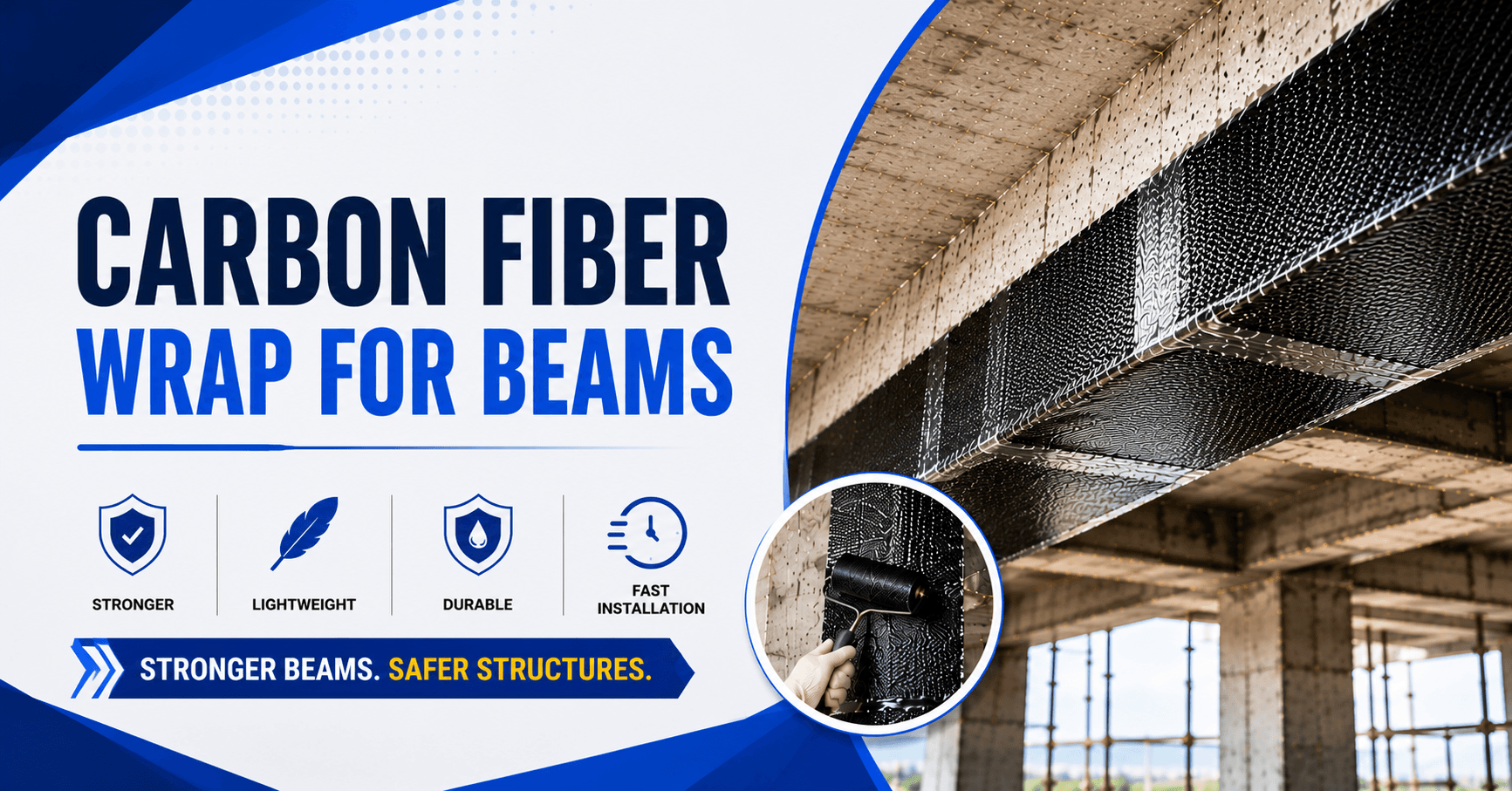
1. Beam Strengthening
Improves bending and shear capacity in RCC beams.
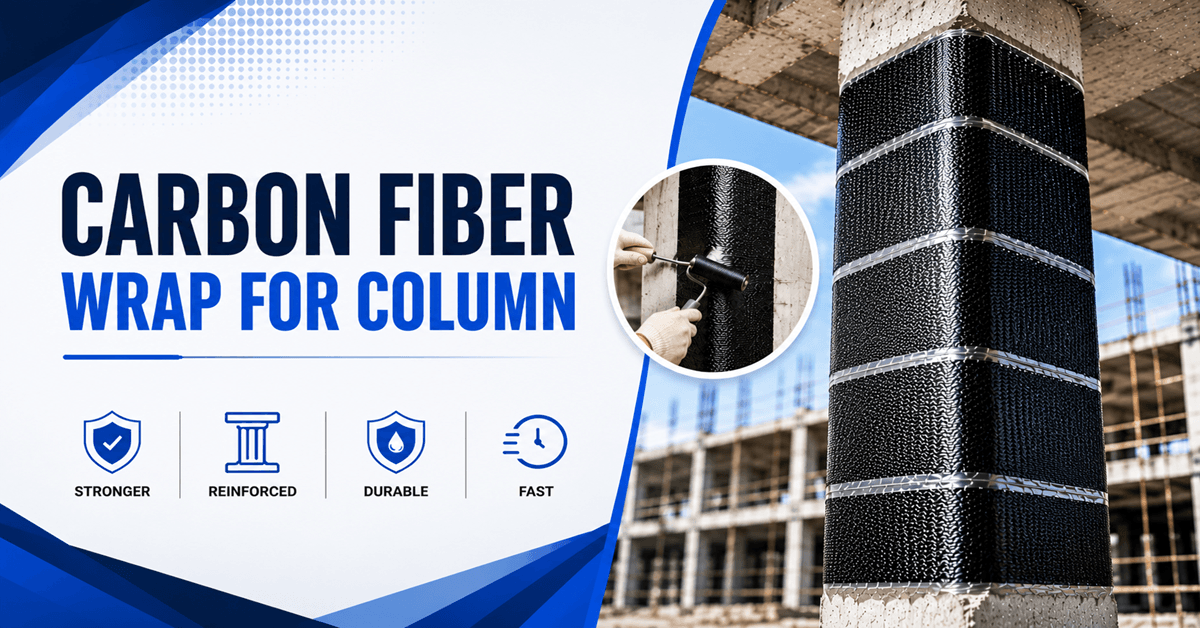
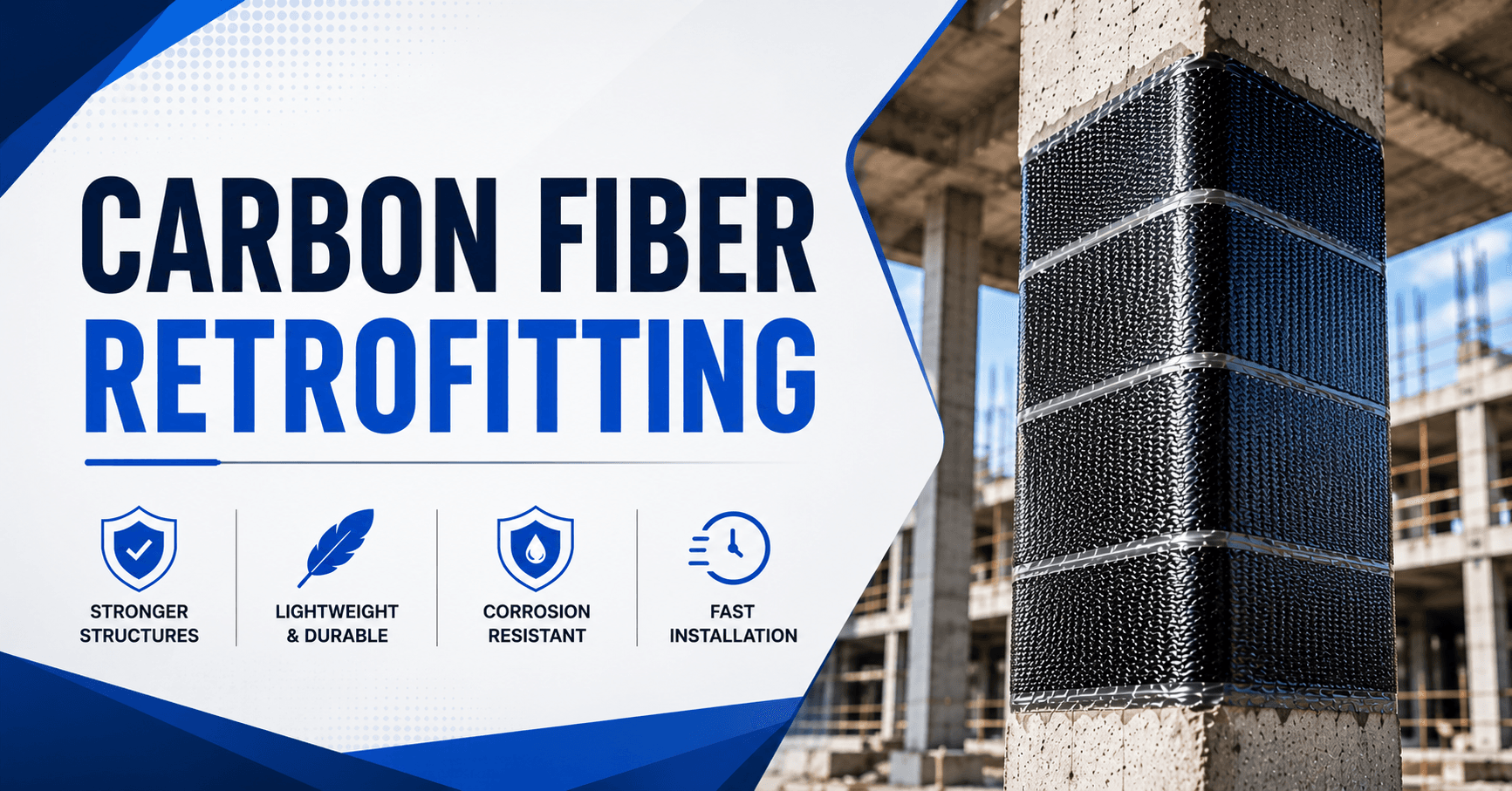
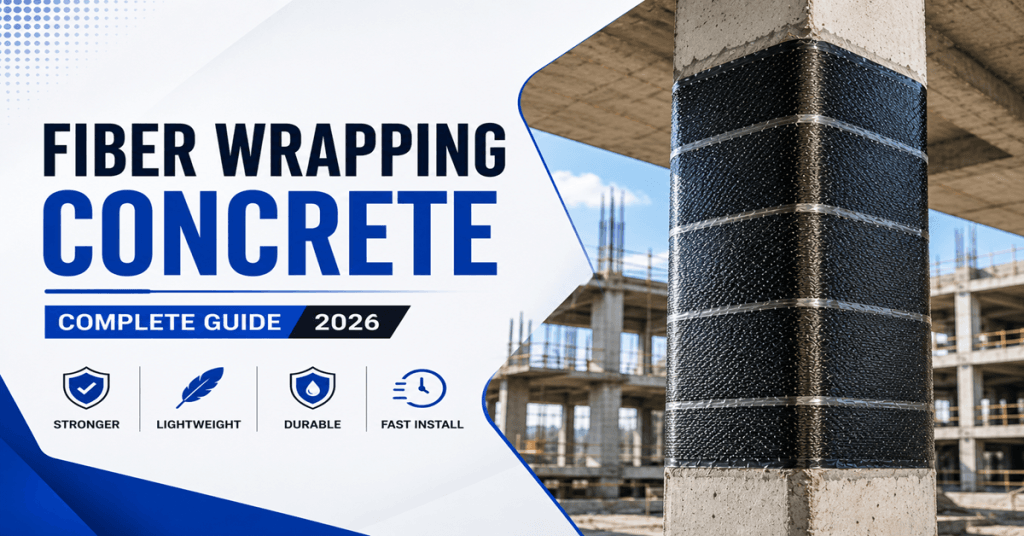
2. Column Strengthening
Provides confinement and increases axial load capacity.
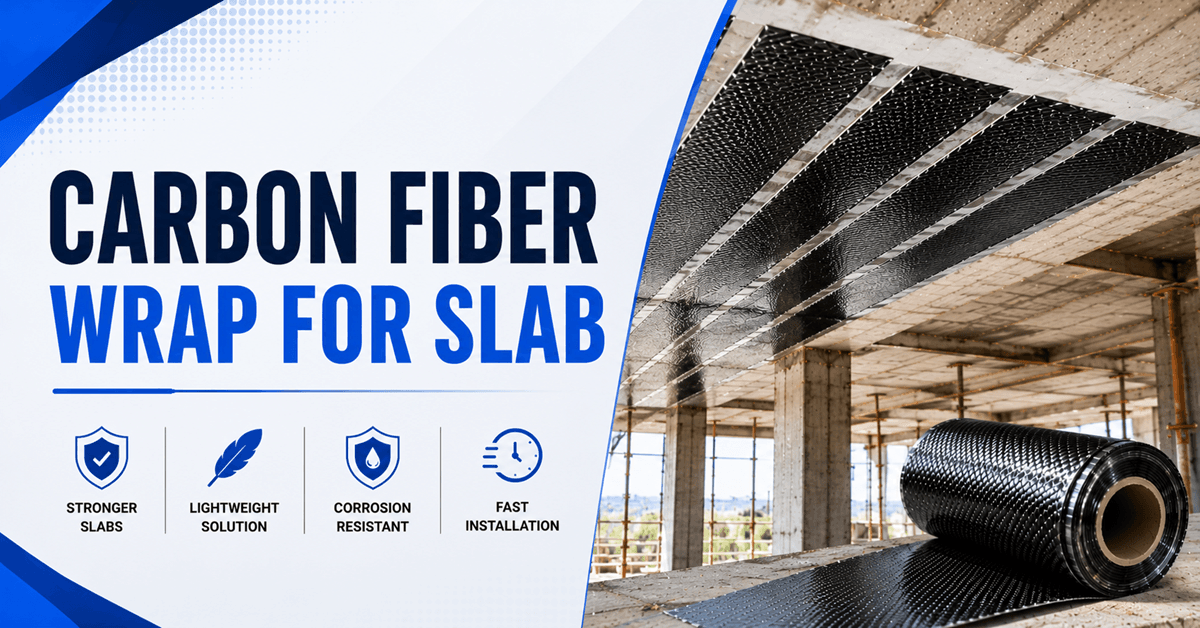
3. Slab Strengthening
Used where load capacity needs enhancement.
4. Seismic Retrofitting
Enhances ductility and earthquake resistance.
5. Bridge Rehabilitation
Extends life of aging infrastructure.
tep-by-Step Fiber Wrapping Process
Step 1: Surface Preparation
- Remove dust, laitance, and loose particles
- Grind surface for proper bonding
Step 2: Crack Repair
- Fill cracks using epoxy injection or mortar
Step 3: Primer Application
- Apply epoxy primer for adhesion
Step 4: Fiber Sheet Installation
- Apply resin and place fiber sheets
- Ensure proper alignment
Step 5: Rolling & Finishing
- Remove air bubbles
- Apply top coat for protection
Technical Advantages of Fiber Wrapping Concrete
| Property | Benefit |
|---|---|
| High Tensile Strength | Improves load capacity |
| Corrosion Resistance | Long-term durability |
| Lightweight | No structural load increase |
| Flexibility | Easy application in complex shapes |
| Chemical Resistance | Suitable for industrial environments |
Fiber Wrapping vs Traditional Strengthening Methods
| Method | Fiber Wrapping | Jacketing |
|---|---|---|
| Weight | Very Low | High |
| Installation Time | Fast | Slow |
| Thickness | Minimal | Bulky |
| Durability | High | Moderate |
| Cost Efficiency | High ROI | Moderate |
Design Considerations for Fiber Wrapping
Before applying fiber wrapping concrete, engineers must evaluate:
- Structural condition
- Load requirements
- Type of fiber (CFRP/GFRP)
- Number of layers
- Environmental exposure
Proper design ensures maximum performance and safety.
Common Mistakes to Avoid
- Poor surface preparation
- Incorrect resin mixing
- Improper fiber alignment
- Air voids during application
- Lack of skilled labor
Avoiding these mistakes ensures long-lasting strengthening results.
Fiber Wrapping Concrete in India (2026 Trends)
Growing Demand Due To:
- Aging infrastructure
- Coastal corrosion issues
- Smart city projects
- Industrial expansion
Popular Use Cases:
- Residential buildings
- Bridges & flyovers
- Industrial plants
- Marine structures
factors affecting Cost of Fiber Wrapping Concrete in India
The cost depends on:
- Type of fiber (Carbon > Glass)
- Area of application
- Number of layers
- Site conditions
Maintenance & Durability
Fiber wrapping systems require minimal maintenance. When applied correctly:
- Lifespan: 20–50 years
- Resistant to corrosion & chemicals
- Periodic inspection recommended
Frequently Asked Questions (FAQs)
What is fiber wrapping concrete?
Fiber wrapping concrete is a technique of strengthening RCC structures using FRP sheets bonded with epoxy.
Is fiber wrapping stronger than steel?
Yes, carbon fiber has a higher tensile strength than steel.
Where is fiber wrapping used?
Beams, columns, slabs, bridges, and industrial structures.
How long does fiber wrapping last?
Typically 20–50 years depending on conditions.
Is fiber wrapping expensive?
It has a higher initial cost but offers long-term savings due to durability.
Conclusion
Fiber Wrapping Concrete is a game-changing solution for modern structural strengthening. With its high strength, durability, and fast application, it has become the preferred method for engineers and contractors worldwide.
Whether it’s repairing an old building, increasing load capacity, or protecting structures from environmental damage, fiber wrapping offers a reliable, cost-effective, and long-lasting solution.
Strengthen Your Structure with Expert Fiber Wrapping Solutions
Get professional consultation and the best price for fiber wrapping concrete for your project.
👉 Call Now or WhatsApp to Get Instant Quote