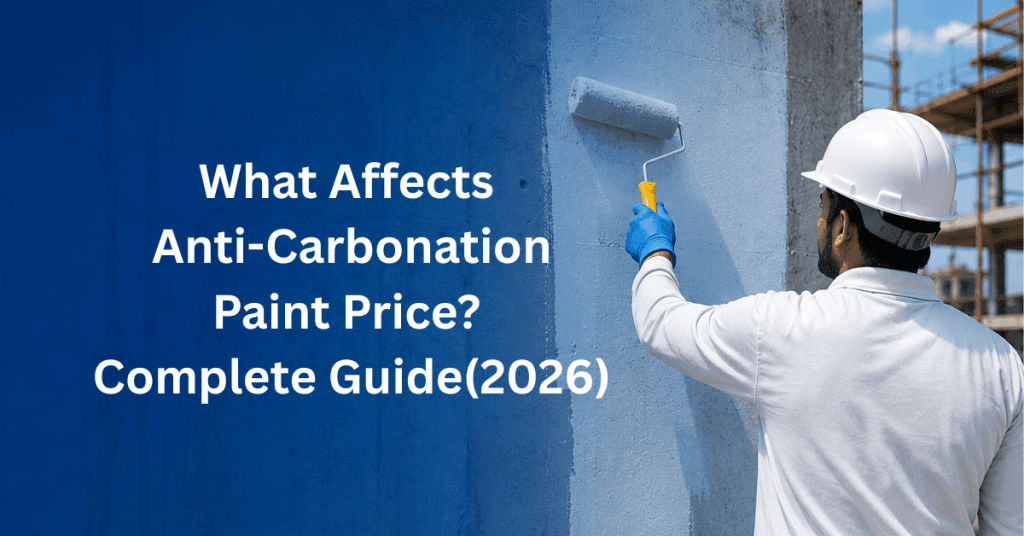
What Affects Anti-Carbonation Paint Price? Complete Guide (2026)
Anti-carbonation paint is one of the most critical protective coatings used in modern construction, especially for RCC structures exposed to harsh environments. If you’re planning a project, understanding what drives anti-carbonation paint price can help you save costs while ensuring long-term durability.
This complete 2026 guide explains every factor that influences anti carbonation paint pricing, helping contractors, builders, and engineers make smarter decisions.
What is Anti-Carbonation Paint?
Anti-carbonation paint is a specialized protective coating designed to prevent carbon dioxide (CO₂) from penetrating concrete surfaces. It helps protect reinforcement steel from corrosion, extending the life of structures like:
- Bridges
- Buildings
- Flyovers
- Industrial structures
Key Factors That Affect Anti-Carbonation Paint Price
1. Type of Paint Technology
The formulation plays a major role in pricing:
- Acrylic-based coatings – Budget-friendly, common use
- Elastomeric coatings – Flexible, crack-bridging (higher cost)
- Silicone / advanced coatings – Premium protection, expensive
👉 Higher technology = better durability = higher price.
2. Brand & Manufacturer
Well-known manufacturers typically charge more due to:
- Proven performance
- Quality assurance
- Technical support
Local or unbranded products may be cheaper but can compromise durability.
3. Coverage Area (Sq. Ft.)
Paint cost depends heavily on coverage:
- Higher spreading rate = lower cost per sq.ft.
- Low-quality paints require more coats → increases cost
👉 Always calculate cost per sq.ft., not per litre.
4. Surface Condition
Surface preparation directly impacts total cost:
- Smooth surface → less material required
- Damaged/cracked surface → more primer, repair, and paint
Additional costs may include:
- Crack filling
- Surface cleaning
- Priming
5. Number of Coats Required
Typical system includes:
- 1 coat primer
- 2 coats anti-carbonation paint
More coats = higher material + labor cost
6. Thickness Requirement (DFT)
Dry Film Thickness (DFT) affects price significantly:
- Standard: 150–250 microns
- High-performance: 300+ microns
👉 Higher thickness = more consumption = higher cost
7. Project Location
Location impacts logistics and labor:
- Metro cities → higher labor cost
- Remote areas → higher transportation cost
8. Labor & Application Cost
Application method matters:
- Roller application → economical
- Spray application → faster but costly
Skilled labor for proper coating also adds to cost.
9. Quantity Purchased
Bulk orders often reduce cost:
- Large projects → discounted rates
- Small quantity → higher per unit cost
10. Weather & Environmental Conditions
Extreme exposure areas require premium coatings:
- Coastal areas → high salt resistance needed
- Industrial zones → chemical-resistant coatings
👉 Specialized coatings increase price.
Anti-Carbonation Paint Price at Constro Chem India(2026)
Anti-Carbonation Paint Price is ₹170 per kg*
How to Reduce Anti-Carbonation Paint Price
- Choose the right coating (avoid over-specification)
- Ensure proper surface preparation
- Buy in bulk
- Work with experienced applicators
Compare cost per sq.ft., not just product price
When Should You Use Anti-Carbonation Paint?
Use it when:
- RCC structure is exposed to atmosphere
- Carbonation risk is high
- Structure shows early signs of corrosion
- You want long-term protection (10–15 years)
For expert guidance, contact us today!
Get Best Anti Carbonation Paint Price Today
👉 Talk to a technical expert and get instant quotation
👉 Bulk discount available for large projects : Click Here
📞 Call Now for Best Price: +91 9323244244
Frequently Asked Questions (FAQs)
What is the anti carbonation paint price?
Anti carbonation paint price typically starts from ₹170 per kg and can go higher depending quality, and performance features like crack-bridging and UV resistance.
What factors affect anti carbonation paint price?
The price of anti carbonation paint depends on:
- Type of coating (acrylic, elastomeric, premium)
- Surface condition (cracks, repairs needed)
- Coverage & thickness (DFT)
- Number of coats
- Brand and product quality
- Location & labor cost
These factors significantly influence overall coating cost in India.
Is anti carbonation paint expensive compared to normal paint?
Yes, anti carbonation paint is costlier than normal paint because it provides CO₂ resistance, crack bridging, and long-term durability, which standard paints do not offer.
How many coats are required and how does it affect price?
Most applications require 2–3 coats, and more coats increase both material consumption and overall cost.
Is anti carbonation paint worth the price?
Yes, it is cost-effective in the long term because it prevents carbonation, corrosion, and structural damage, extending the life of RCC structures.
How long does anti carbonation paint last?
Anti carbonation coatings typically last 10–15 years, depending on environmental exposure and application quality.