What is Carbon Laminate? Uses, Benefits & Application in Construction (2026)
Introduction to Carbon Laminate
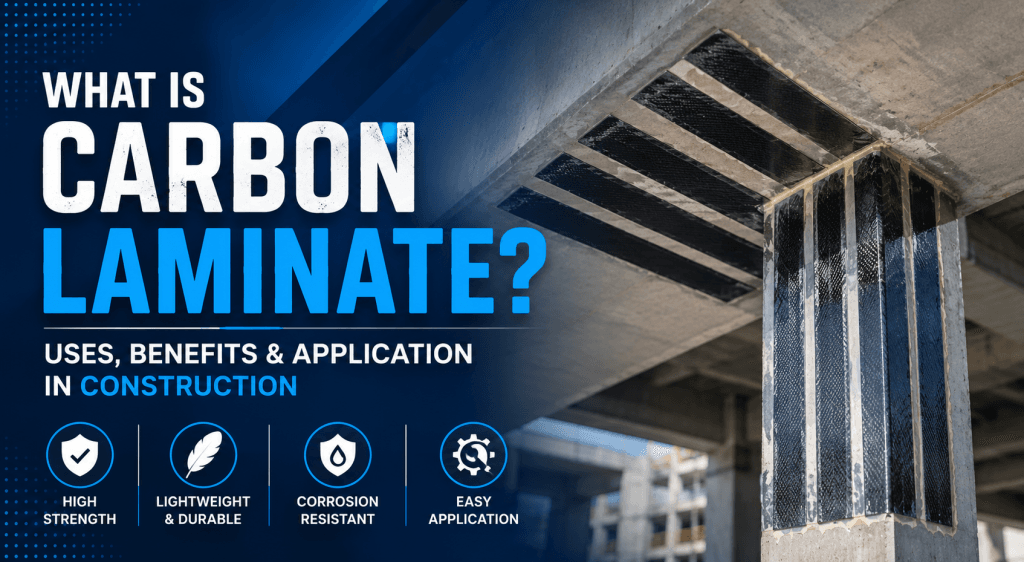
Carbon Laminate (also known as CFRP laminate or carbon fiber plate) is a pre-cured, high-strength structural reinforcement material used in modern construction and RCC repair. It is made from carbon fiber sheet material combined with epoxy resin and cured into rigid strips or plates.
These laminates are externally bonded to concrete or steel surfaces to increase load-bearing capacity, flexural strength, and durability—making them a core component of carbon fiber reinforcement systems.
What is Carbon Laminate in Simple Terms?
Carbon laminate is a thin, lightweight, but extremely strong strip that is bonded to structural members like:
- RCC beams
- Concrete slabs
- Columns
It acts like an external reinforcement, similar to steel, but:
- 5–10 times stronger
- Non-corrosive
- Lightweight and easy to install
Where is Carbon Laminate Used?
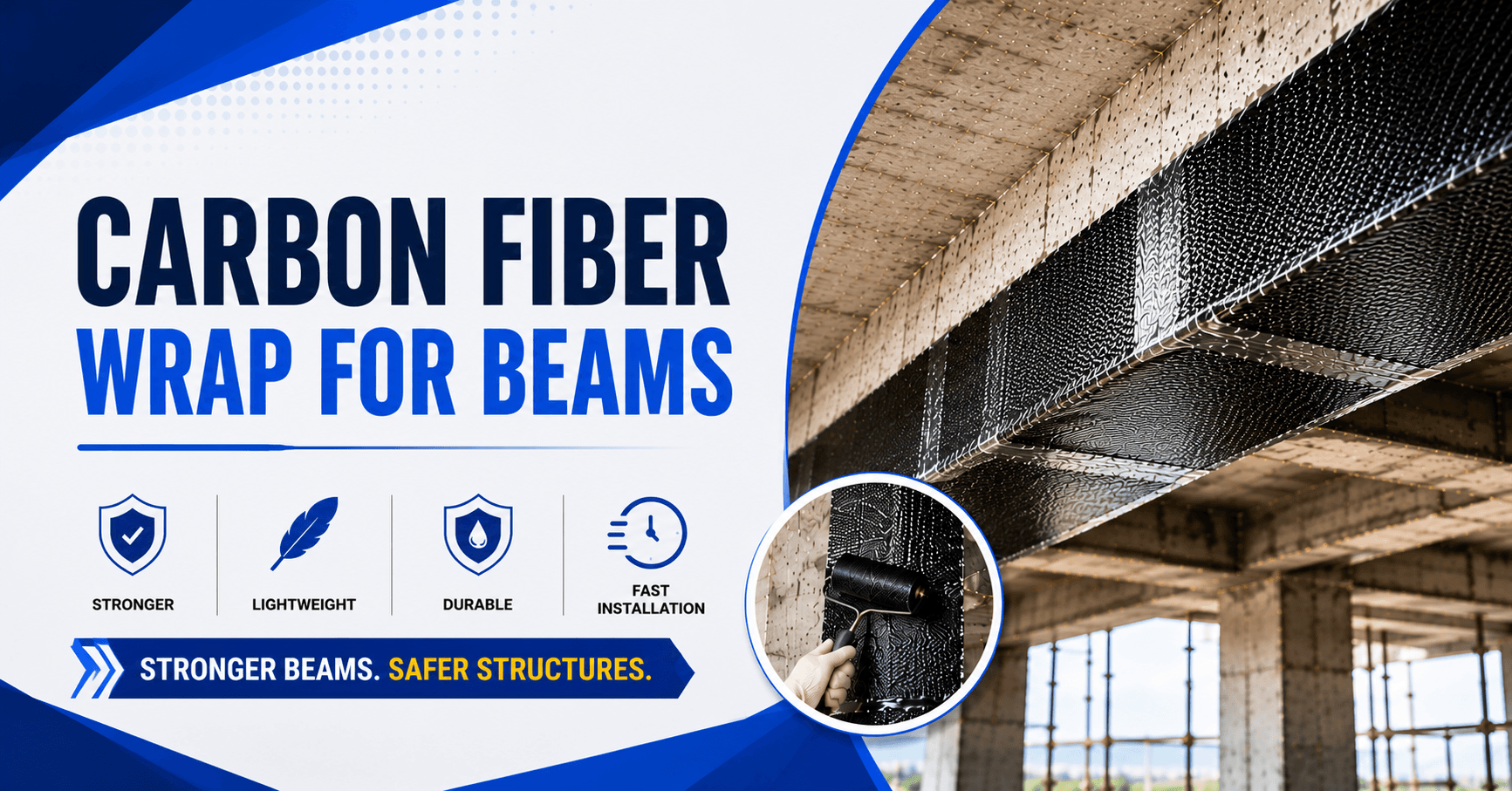
Beams often require strengthening due to:
- Increased load demand
- Design errors
- Structural damage
Benefits:
- Improves flexural strength
- Prevents sagging and cracking
- Ideal for industrial & commercial buildings
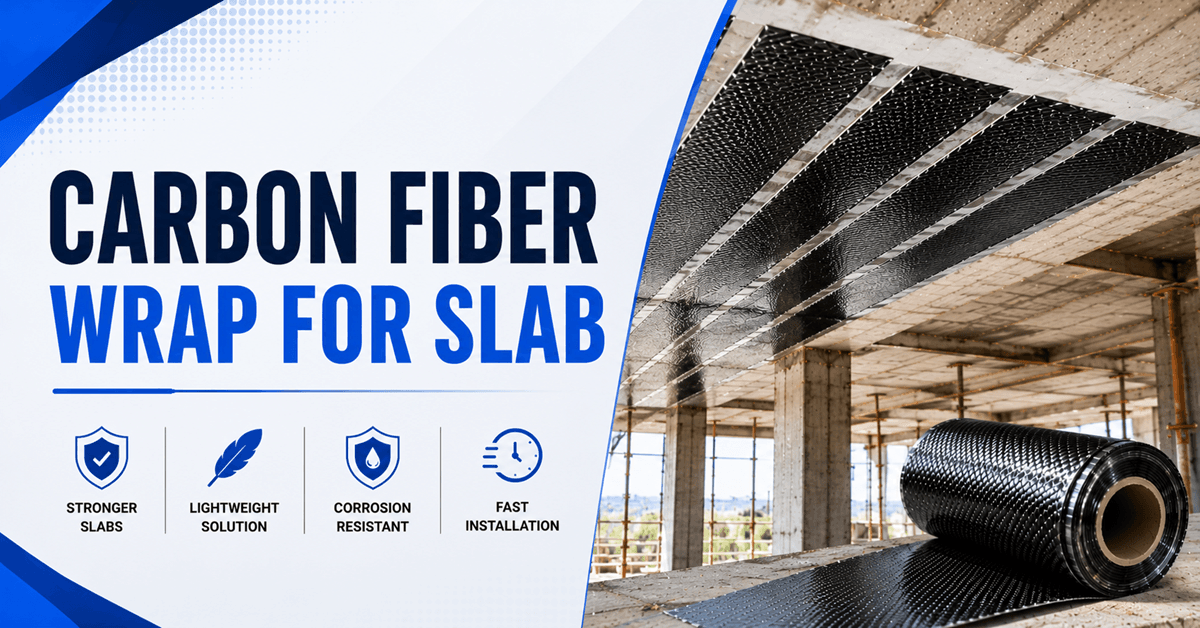
Used in slabs for:
- Load capacity enhancement
- Crack control
- Structural retrofitting
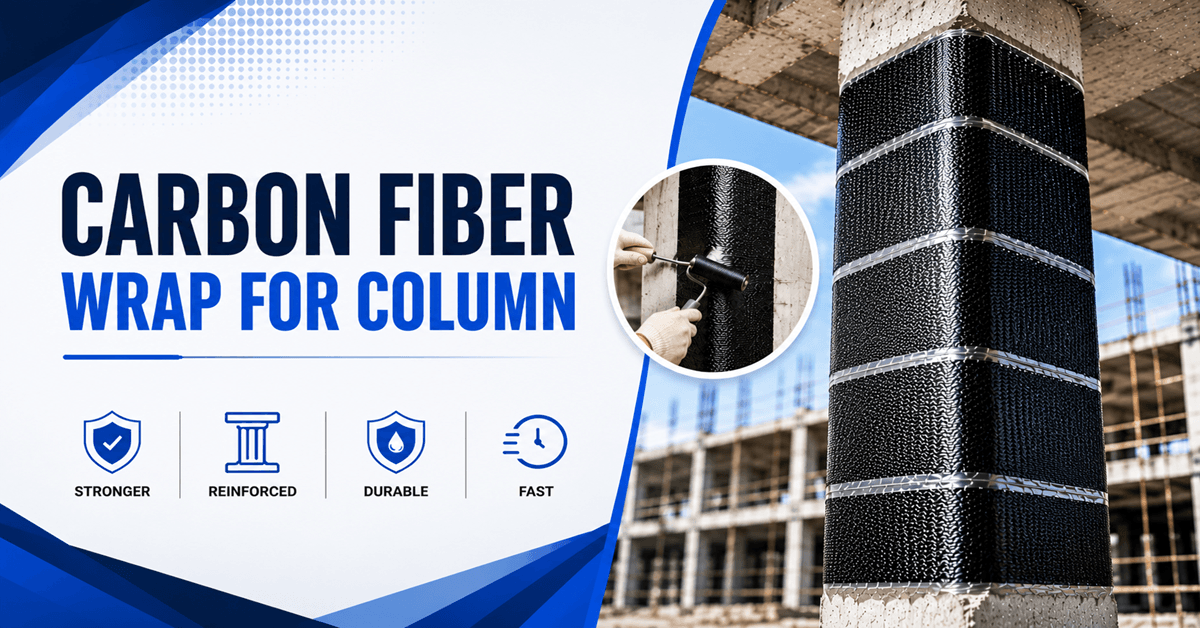
Applied to:
- Increase axial load capacity
- Improve structural safety
Often combined with carbon fiber wrap for column for complete reinforcement.
Carbon Laminate Material & Composition
A standard carbon laminate system includes:
1. Carbon Fiber Core
- High tensile strength fibers
- Unidirectional alignment
2. Epoxy Resin Matrix
- Bonds fibers together
- Provides rigidity
3. Adhesive System
- Epoxy-based bonding agent
- Ensures strong attachment to concrete
Step-by-Step Application Process
Step 1: Surface Preparation
- Clean and grind the surface
- Remove dust and loose particles
Step 2: Crack Repair
- Fill cracks using epoxy putty
Step 3: Adhesive Application
- Apply epoxy adhesive evenly
Step 4: Laminate Placement
- Fix carbon laminate on surface
Step 5: Pressure Rolling
- Ensure proper bonding
Step 6: Curing
- Allow proper curing time
Key Benefits of Carbon Laminate
- ✅ Extremely high tensile strength
- ✅ Lightweight and thin
- ✅ Corrosion-resistant
- ✅ Quick installation
- ✅ Minimal structural alteration
- ✅ Long service life (20–50 years)
Carbon Laminate vs Carbon Fiber Wrap
| Feature | Carbon Laminate | Carbon Fiber Wrap |
|---|---|---|
| Form | Rigid plate | Flexible fabric |
| Application | Bonded externally | Wrapped around structure |
| Strength | High flexural | High confinement |
| Use | Beams & slabs | Columns & beams |
👉 Both are used together in carbon fiber retrofitting systems.
The carbon laminate price depends on:
- Thickness (1.2 mm – 3 mm)
- Width and length
- Brand and quality
- Project scale
Applications in Construction Industry
- Residential buildings
- Commercial structures
- Bridges & flyovers
- Industrial plants
- Parking structures
Common Mistakes to Avoid
- Poor surface preparation
- Incorrect adhesive mixing
- Misalignment during installation
- Lack of curing time
Why Carbon Laminate is the Future of Structural Strengthening
With increasing infrastructure demand, carbon laminate systems are becoming essential due to:
- Faster project execution
- Superior performance
- Long-term cost savings
Carbon Laminate & Carbon Fiber Reinforcement System
Carbon laminate works as part of a broader system including:
Together, they form a complete carbon fiber reinforcement solution.
Get Expert Consultation
Need help with your project?
👉 Get best carbon fiber price quote
👉 Suitable for residential, commercial & industrial structures
Call / WhatsApp now to strengthen your structure with advanced carbon fiber laminate technology!
Frequently Asked Questions (FAQs)
What is carbon laminate used for?
It is used for strengthening RCC beams, slabs, and columns.
Is carbon laminate stronger than steel?
Yes, it has higher tensile strength and is corrosion-resistant.
What is the difference between carbon laminate and carbon fiber wrap?
Laminate is rigid; wrap is flexible fabric used for wrapping.
How long does carbon laminate last?
Typically 20–50 years depending on application.